Why We Think Fence Rental Companies Are a Great Acquisition for Accredited Investors
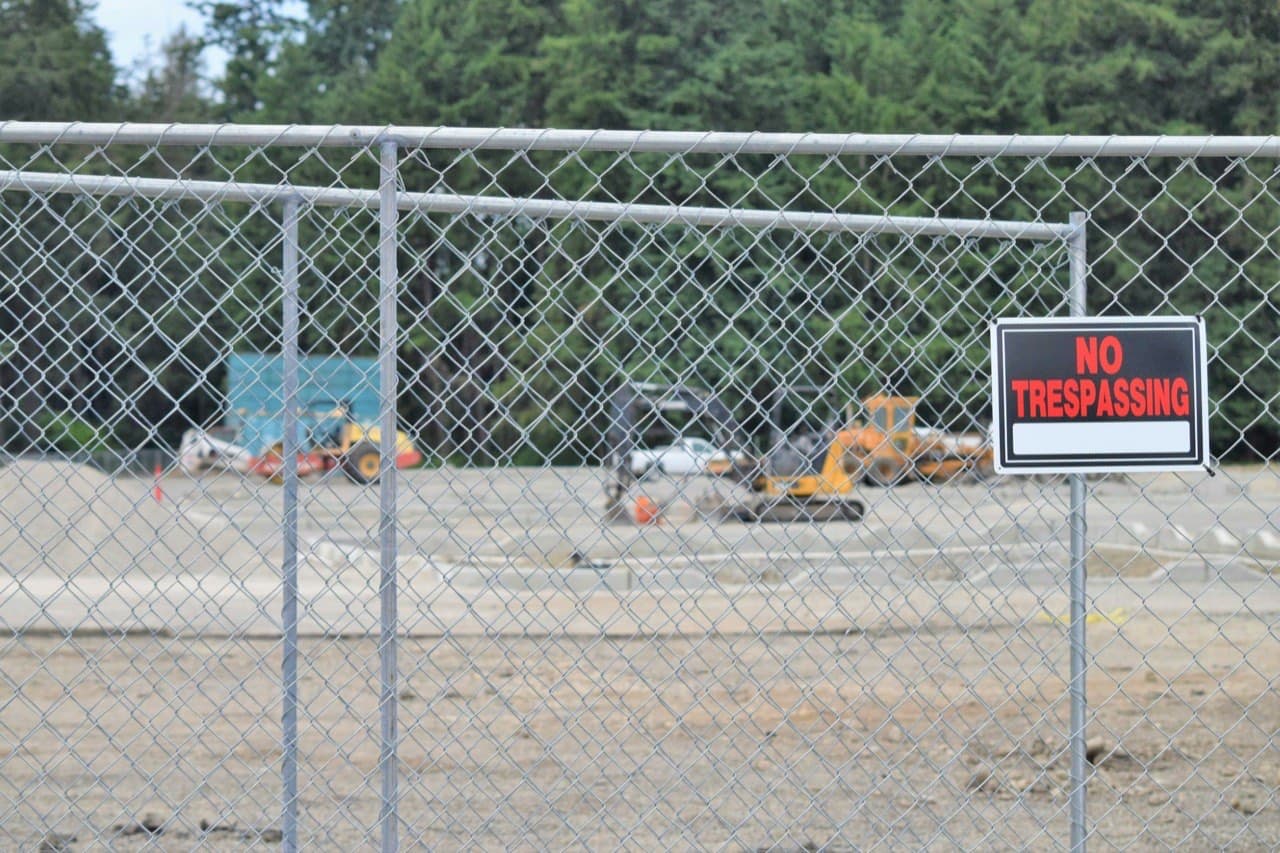
TL;DR: Temporary fence rental is one of the highest asset-yield businesses in the lower middle market and almost nobody talks about it. A chain-link panel costs roughly $129 all-in and rents for $30 to $50 per month, which means the asset pays for itself in three or four rentals and then keeps earning for a decade. Measured on dollar utilization, the metric the rental industry grades itself on, a general equipment fleet benchmarks at 38 to 48 percent annually. A fence panel fleet can clear 150 percent. Demand is non-discretionary because site fencing is a permit condition, not a nice-to-have, and the average North American construction project runs 37 percent longer than scheduled, which extends rental terms without a single new sale. Owner-operated equipment rental businesses trade at roughly 2 to 3.5 times seller's discretionary earnings. Strategic consolidators are actively buying the good ones. Below is the full thesis, the unit economics, and the risks we would underwrite before signing an LOI.
Why do we like fence rental businesses for accredited investors?
Most businesses that pass our screen fail on one dimension: they need capital to grow, and the capital does not earn its keep. Equipment rental usually fails here. You buy a $185,000 excavator, it generates $63,000 a year, and you are underwater on the benchmark before you have paid the driver.
Temporary fence rental inverts that math. The asset is cheap, standardized, and nearly indestructible. It does not have an engine, hydraulics, an hour meter, or a maintenance schedule. It is galvanized steel that sits in the dirt and collects rent. When it comes back scratched, you stack it and send it out again. When it comes back bent, you straighten it.
That single characteristic drives everything else in this thesis. Cheap assets with long lives and high rental rates produce payback periods measured in months, not years, which means growth is self-funding in a way almost nothing else in the rental category is. Add demand that is written into building permits, contracts that extend themselves when projects slip, and a fragmented supply base with active strategic buyers at the top, and you have a category that deserves more attention than it gets.
How does a temporary fence rental business actually make money?
The model is exactly as simple as it sounds, which is part of the appeal. You own the fencing. You deliver it, install it, bill monthly rent for as long as it stands, then come pick it up.
Revenue comes in four layers, and understanding the mix is the first thing to do in diligence.
The base rent is the core. Panel-based pricing runs roughly $20 to $50 per 6-foot by 12-foot panel per month, or $1.50 to $3.50 per linear foot per month depending on market and fence type. A 200-foot construction perimeter typically bills $600 to $1,600 per month.
Mobilization and demobilization fees come next. Delivery, installation, and pickup are billed separately in most markets, with initial mobilization commonly running $150 to $500 depending on distance. These are one-time per job but they are real margin, and they are the reason job density matters so much.
Accessories are the quiet profit center. Privacy and wind screens add $1 to $4 per linear foot per month on top of base rent. A standard swing gate adds $50 to $150 per month, and a slide gate for wider openings runs $100 to $300. Screens and gates cost very little relative to what they rent for, and the customer rarely price-shops the add-ons once the base rate is agreed.
Then there are damage waivers and extensions. Damage waivers commonly run 8 to 12 percent of the rental total. Extensions matter more than most buyers realize, and we cover why in a moment.
A well-run shop pulls a meaningful share of total revenue from everything other than base panel rent. When you underwrite one of these, separate the layers. A business with a strong accessory attach rate is running a better operation than one living on base rent alone, and that gap is where a new owner's first margin gains come from.
What do the unit economics of a rental fence panel look like?
This is the section that made us write the post.
A chain-link panel starter kit, including the panel, stand, and hardware, costs roughly $129. That same panel rents for $30 to $50 per month. Industry pricing guidance is blunt about what that means: rental companies typically recover the cost of the product after three or four rentals.
Run it out across a fleet. The numbers below are illustrative, not a promise, and any real deal needs its own model built from the seller's actual rate card and utilization.
| Line | Illustrative figure |
|---|---|
| Panels in fleet | 500 |
| All-in cost per panel | $130 |
| Fleet original equipment cost | $65,000 |
| Average realized rent per panel | $32 per month |
| Time utilization | 65 percent |
| Annual revenue per panel | ~$250 |
| Annual fleet rental revenue | ~$125,000 |
| Dollar utilization | ~192 percent |
Now put that against the benchmark. Dollar utilization is annual rental revenue divided by original equipment cost, and it is the number the American Rental Association standardized so operators could compare themselves honestly. A mixed general rental fleet benchmarks around 38 to 48 percent annualized. Aerial-heavy and specialty fleets should clear 50 percent. Anything under about 35 percent means the fleet is too expensive for the rates the market will bear.
A fence panel fleet at 192 percent is not in the same conversation. And that figure excludes mobilization fees, gates, and screens, which sit on top.
The other half of the equation is asset life. A galvanized steel panel has no moving parts and no wear items. With basic repair it stays in service for a decade or more. Over that life a single panel can return its purchase price twenty times or more. Compare that to heavy equipment, where the asset depreciates hard, needs a maintenance program, and carries repair exposure that eats the spread.
This is the entire reason we like the category. Growth capital in this business converts to cash flow faster than in almost any other rental vertical, which means an operator can compound a fleet out of operating cash instead of continually going back to a lender.
Why does construction schedule slippage work in the owner's favor?
Here is the structural quirk that makes the revenue stickier than it looks on paper.
Standard rental agreements run a 28-day minimum and convert to month-to-month afterward. Long-term construction projects commonly rent for 6 to 18 months. So far, ordinary.
Then reality intervenes. In North America, 98 percent of construction projects face delays, and the average project stretches 37 percent longer than originally projected. Large projects typically run about 20 percent behind schedule. A McKinsey review of more than 300 projects above $1 billion in contract value found schedule delays averaging roughly 50 percent.
The fence does not come down when the schedule says it will. It comes down when the project is actually finished. Every week of slippage is another week of billing on equipment that is already deployed, already paid for, and requires no additional labor to keep earning. Better still, when a rental runs past the agreed term, many suppliers move the account to standard monthly pricing without the original negotiated discount, so extended time frequently bills at a higher effective rate than the original contract.
We want to be precise here, because this is a point that gets oversold. This is not recurring revenue in the software sense. There is no contract obligating renewal and no switching cost keeping the customer in place. It is better described as duration-extending revenue: jobs reliably last longer than the contract assumed, and the operator captures that extension at full rate with zero incremental cost. Across a book of dozens of active job sites, that pattern is consistent enough to underwrite.
The corollary matters for diligence. Ask for actual average rental duration against originally quoted duration. If the seller cannot produce it, the operation is not being measured properly, which is itself a piece of information about what a new owner could fix.
Is demand for temporary fencing discretionary?
Largely, no. That is the second structural feature worth paying for.
Site fencing on commercial construction is generally not an optional line item. Municipalities routinely require permits for fencing over six feet, fencing that obstructs a sidewalk, or fencing installed for more than 30 to 90 days, and construction sites frequently need fencing as a condition of the building permit itself. Layer on general contractor site-safety obligations, insurance requirements, and liability exposure from an unsecured site, and perimeter fencing becomes a cost of doing the job rather than a discretionary purchase.
The customer is not deciding whether to fence the site. They are deciding who to call. That is a much better position to sell into than one where your product competes against doing nothing.
Construction drives more than 55 percent of total temporary fencing demand. The balance comes from events, public safety, municipal work, and disaster response, and that mix is worth attention in diligence because the segments behave differently. Construction is longer-duration and lower-touch. Events are short, labor-intensive, weekend-heavy, and priced higher per day. Disaster and emergency response is lumpy but extremely high-rate. A business with all three has a smoother year than one that only serves general contractors.
How big is the temporary fence rental market?
Harder to size credibly than most categories we look at, and we would rather say that plainly than quote a number we do not trust.
Published estimates for the temporary fence rental market disagree by roughly five times, ranging from under $1 billion to more than $3.5 billion globally depending on the research firm and how the segment is defined. Some counts include manufacturing, some only rental. Some fold in barricades and crowd control, some do not. Growth estimates cluster around 5 to 9 percent annually. The United States represents something over 40 percent of global share.
Our honest read: do not underwrite this deal off a top-down market study. The number you actually need is bottom-up and local. How much commercial construction is permitted in the service radius, how many active general contractors operate there, how many competing yards serve them, and what does the incumbent's share of that look like. Fence rental is a local business with a delivery radius, and national market size tells you almost nothing about whether a specific yard in a specific metro is a good buy.
What is reliably true about the supply side is that it is fragmented. The category is served by a long tail of small, owner-operated yards alongside a handful of national players. That is the setup we look for, and it is the reason the exit path in this category is unusually clear.
What multiples do fence rental businesses sell for?
Equipment rental businesses trade in reasonable ranges, with a floor underneath them that most service businesses do not have.
Owner-operated equipment rental businesses commonly trade around 2.0 to 3.5 times seller's discretionary earnings per BizBuySell benchmark data. Small to mid-sized operations are often quoted at 4 to 6 times EBITDA, with larger diversified fleets reaching 7 to 8 times. Specialty rental segments, meaning categories like trench safety, power, and pump rental where the fleet is purpose-built rather than general, have been cited at 6 to 10 times EBITDA. For context, the median small business sold in the first quarter of 2026 closed at 2.7 times SDE on $165,256 of cash flow.
The distinguishing feature versus an asset-light services business is the asset floor. Brokers commonly value rental fleets at 70 to 85 percent of net book value, and that valuation sets a level below which buyers will not bid even when earnings are weak. If the operating business disappoints, you still own several hundred thousand dollars of steel with a functioning secondary market. That is a meaningfully different downside profile than buying a book of management contracts that can walk.
The flip side is that the asset floor also caps how cheap you can buy. You will rarely get a fence rental business at a distressed multiple of earnings, because the seller knows what the fleet alone is worth. Price discipline in this category comes from buying an underperforming operation sitting on a good fleet, not from finding a bargain multiple.
Where a specific deal lands depends on dollar utilization against fleet cost, fleet age and condition, the contractor versus event customer mix, and how well the inventory and maintenance records are documented. If you want the underlying frameworks, our guide to 5 methods of valuation every business buyer should know covers how to triangulate the earnings approach against the asset approach, which matters more here than in most categories.
How does fence rental compare to other acquisition targets?
Here is how it stacks up against other lower middle market categories on the dimensions we care about.
| Dimension | Temporary Fence Rental | Property Management | Portable Toilet / Site Services | Heavy Equipment Rental |
|---|---|---|---|---|
| Revenue type | Monthly, duration-extending | Recurring, contracted | Monthly, route-based | Transactional to monthly |
| Capital intensity | Moderate (cheap assets, many) | Very low | Moderate | Very high |
| Asset payback period | ~3 to 4 rentals | Not applicable | ~12 to 24 months | ~3 to 5 years |
| Asset dollar utilization | Can exceed 150 percent | Not applicable | High | ~38 to 48 percent |
| Demand driver | Permit and safety mandated | Rental housing demand | Regulatory and site mandated | Construction capex cycles |
| Asset value floor at exit | Yes | No | Yes | Yes |
| Typical small-deal multiple | ~2 to 3.5x SDE | ~2.5 to 3x SDE | ~3 to 4x SDE | ~2 to 3.5x SDE |
| Roll-up potential | Strong | Strong | Strong | Moderate |
| Cyclicality | Moderate to high | Low | Moderate | High |
We want to be direct about the honest tradeoff. Our property management thesis praised that category for being asset-light. Fence rental is not asset-light, and anyone who tells you otherwise is selling something. You are buying steel and trucks.
The argument is that the assets earn their cost back extraordinarily fast and then keep earning for years, which is a different and in some ways better proposition than owning no assets at all. Asset-light means nothing to depreciate and nothing to finance. High-asset-yield means the capital you deploy comes back quickly and leaves a liquidation floor behind it. Those are two different risk profiles, and which one you prefer depends on whether you would rather have zero downside assets or a hard floor under your equity.
Where is the operating leverage in a fence rental business?
Not in the fence. In the truck.
Roughly 34 percent of operational costs in this industry come from transportation and setup labor. That is the dominant cost line, and it is the one that separates a 15 percent margin operator from a 30 percent margin operator in the same market at the same rate card.
The lever is route density. Every delivery has a fixed cost in fuel, driver hours, and truck time that barely changes whether the destination is four miles away or forty. An operator with sixty active job sites clustered in one metro runs a fundamentally more profitable business than an operator with sixty sites scattered across three counties, even at identical revenue. Density is why the incumbent in a market is hard to dislodge and why buying the incumbent is usually better than starting up next to them.
The practical improvements a new owner can make, in rough order of impact:
| Lever | What it looks like in a tired shop | What it looks like after |
|---|---|---|
| Route and dispatch planning | Driver decides the day's order in the morning | Clustered routing, batched deliveries and pickups by zone |
| Fleet tracking | Panel counts on a whiteboard or in the owner's head | Inventory system that knows where every panel is and for how long |
| Off-rent capture | Panels sit at completed sites unbilled or unretrieved | Systematic pickup triggers, no idle steel in the field |
| Accessory attach rate | Gates and screens quoted only when asked | Screens, gates, and waivers on the standard quote template |
| Rate discipline | Same rate for a two-week job and a two-year job | Duration-tiered pricing, extension rates enforced |
| Damage and loss recovery | Written off quietly | Documented condition on delivery, waiver and damage billing |
None of this is exotic. It is the operating layer that a fifteen-year owner-operated yard usually never built because the owner was in a truck. That gap between how these businesses are run and how they could be run is the opportunity, and it is the same gap we described in property management even though the specific fixes are entirely different.
Is fence rental a good fit for a roll-up, and who buys at exit?
Yes, and this is one of the clearer exit stories in the lower middle market, because the strategic buyers have already shown their hand.
United Site Services, which operates more than 100 locations nationwide, has acquired independent fence rental operators outright, including Florida Fence Rental, folding them into a bundled temporary site services platform. WillScot, the modular space and portable storage company, runs a national temporary fencing business under RentaFence.com spanning fifteen-plus states and expanding. United Rentals carries temporary fence and barricade inventory across its branch network.
Read what those moves tell you. The strategics want fencing because it attaches to what they already deliver. If a general contractor is already renting your job trailer, your portable toilets, and your storage container, adding the fence to that invoice costs the consolidator almost nothing in incremental sales effort and rides the truck that is already going there. Fencing is a bolt-on to site services, and that is precisely why independent yards are acquisition targets rather than roadkill.
For a buy-and-build operator the logic runs the same direction. Acquire a hub yard with a real fleet and a contractor list in one metro, bolt on smaller yards or adjacent territories, and spread the yard, the dispatch function, the software, and the sales overhead across a larger fleet. Because the fixed costs of a location are substantial and the marginal cost of another panel is not, density improves margins as you scale rather than degrading them.
The discipline is geographic. Fence rental does not scale by acquiring randomly. Two yards 300 miles apart share almost no operating cost and no route synergy, so you have bought two businesses rather than built one. Buy contiguous, or buy hub-and-spoke inside a delivery radius.
One competitive note we would not skip. WillScot is explicitly marketing flexible 28-day rental terms against what it characterizes as the industry's long lock-in contracts. When a well-capitalized national player competes on contract terms rather than price, it can compress an incumbent's duration advantage. Underwrite the local competitive set, not just the local demand.
What are the risks of buying a fence rental business?
We would not publish a thesis without the other side of it.
Construction cyclicality is the big one. Over half of demand is tied to construction activity. When commercial construction starts slow in a metro, panels come off rent and sit in the yard, and fixed costs do not move. This is a real cyclical business, and it is materially more exposed to the construction cycle than property management is to the housing cycle. Underwrite a downturn. Model what happens to cash flow at 40 percent utilization rather than 65.
Seasonality is sharper than most buyers expect. Demand spikes roughly 41 percent during spring and summer. Northern markets can run high utilization in summer and drop hard in winter, while southern markets stay steadier year-round. A trailing twelve-month SDE figure hides this completely. Pull monthly revenue for three years and look at the shape, and understand the working capital swing through the trough months.
Steel input and tariff exposure hits fleet replacement. Tariffs on imported steel have raised costs for rental companies, with much of the industry's raw material imported. That does not hurt the fleet you just bought, and in the short run it actually protects incumbents by raising the cost of new entry. But it raises the cost of every panel you add going forward, which changes your growth math. Model fleet expansion at current steel pricing, not at the seller's historical cost basis.
Transportation cost sensitivity is structural. With transport and setup labor around 34 percent of operating cost, fuel and driver wages flow almost directly to margin. When fuel rose 21 percent in 2023, it hit profitability at more than 40 percent of small and mid-sized rental firms. Your route density is your hedge.
Fleet condition and inventory integrity is the diligence trap. This is the one we would spend the most time on. Panels get lost, stolen, damaged, and left at completed sites. Sellers frequently do not know their true panel count. If the balance sheet says 4,000 panels and a physical count finds 3,400, you have a valuation problem and an operations problem at the same time. Count the steel. Physically. Both in the yard and on rent.
Customer concentration with general contractors. A yard whose revenue is half one large GC relationship carries the same risk as any concentrated book, and GC relationships often live personally with the owner. Spread matters.
Owner dependence. Same story as every small business we underwrite. In fence rental it usually shows up as the owner holding the contractor relationships, the pricing judgment, and the panel count in his head. That is what makes the business cheap and what makes the transition risky.
Permitting, code, and liability exposure. Requirements vary city to city, and an improperly installed or inadequately secured perimeter carries real liability if someone gets hurt. Review the insurance program and the claims history.
How should an accredited investor evaluate a fence rental acquisition?
Start with the fleet, because it is both the asset and the earnings engine.
Build a unit-level fleet ledger. Every panel type, base, gate, and screen, with counts, purchase year, condition, and original cost. Verify it with a physical count rather than a spreadsheet. Then calculate dollar utilization by dividing annual rental revenue by fleet original equipment cost, and calculate time utilization as the percentage of available days each unit is on rent. Those two numbers together tell you whether weak performance is a rate problem or an idle-inventory problem, and they point at completely different fixes.
Second, underwrite duration. Pull average actual rental length against originally quoted length. Pull the extension revenue as a share of total. This is the structural edge in the category and you want to confirm the specific business is actually capturing it rather than letting jobs run long at the original discounted rate.
Third, decompose the revenue. Separate base panel rent from mobilization fees, accessories, and waivers. A business with a thin accessory attach rate is not a worse business, it is an underpriced one, but only if you are confident you can move the attach rate after close.
Fourth, map the route. Plot the active job sites geographically. Clustered sites mean the density economics are already working. Scattered sites mean either a routing problem you can fix or a service area that is genuinely too thin to support the fleet.
Fifth, underwrite the cycle and the season. Three years of monthly revenue, not a trailing twelve-month summary. Model the trough.
Then underwrite your own value-creation case in numbers rather than vibes. Decide which levers you are pulling, estimate the utilization or margin points each is worth, and check whether the price you are paying reflects a tired manual operation while your plan reflects a systematized one. That spread is the deal. If you are new to running this process, our guide on how to buy a small business as an accredited investor walks through the sequence, and if these yards are not showing up on the marketplaces you are watching, off-market outreach is usually how they get found, because a lot of the best ones have never been listed.
Frequently Asked Questions
Is a temporary fence rental business profitable? The asset economics are unusually strong. Panels cost roughly $129 and rent for $30 to $50 per month, so the equipment typically pays for itself in three or four rentals and then continues earning for a decade or more. Whether a specific business is profitable depends much more on route density and utilization than on the rate card, since transportation and setup labor run around 34 percent of operating costs.
How much does a fence rental business charge? Panel pricing commonly runs $20 to $50 per 6-foot by 12-foot panel per month, or about $1.50 to $3.50 per linear foot per month. A 200-foot construction perimeter typically bills $600 to $1,600 monthly. Accessories add meaningfully on top, with privacy screens at $1 to $4 per linear foot per month and gates at $50 to $300 per month depending on type.
What multiple do fence rental businesses sell for? Owner-operated equipment rental businesses commonly trade around 2.0 to 3.5 times seller's discretionary earnings, with small to mid-sized operations often quoted at 4 to 6 times EBITDA. Unlike asset-light service businesses, there is also an asset floor, since rental fleets are commonly valued at 70 to 85 percent of net book value, which limits downside but also limits how cheaply you can buy.
Is fence rental recurring revenue? Not in the contractual sense. There is no renewal obligation and no switching cost. It is better understood as duration-extending revenue: standard terms run a 28-day minimum with month-to-month continuation, and because 98 percent of North American construction projects face delays with the average project running 37 percent longer than planned, deployed fencing tends to bill well past the original quoted term at no incremental cost.
Is temporary fencing a discretionary purchase for contractors? Generally not. Many municipalities require fencing as a condition of the building permit, require permits for fencing above six feet or obstructing sidewalks, and site security obligations plus liability exposure make perimeter fencing a cost of doing the job. The contractor is choosing a vendor, not choosing whether to fence.
Who buys fence rental companies? Strategic consolidators are active. United Site Services has acquired independent fence rental operators and folded them into its bundled site services platform, WillScot operates a national temporary fencing business across fifteen-plus states, and United Rentals carries temporary fence inventory across its branches. Fencing attaches naturally to job trailers, portable storage, and portable sanitation, which is why site services platforms want it.
What is the biggest risk in buying a fence rental business? Two things compete for the top spot. Construction cyclicality is the structural risk, since more than half of demand is tied to construction activity and a slow permitting cycle in your metro puts steel in the yard while fixed costs continue. Fleet inventory integrity is the diligence risk, because sellers frequently do not know their true panel count, and a physical count that comes up short is both a valuation problem and an operations problem.
How is fence rental different from buying a property management business? Property management is asset-light with contracted recurring revenue and low cyclicality. Fence rental is asset-heavy with duration-extending revenue, higher cyclicality, and an asset value floor at exit. The tradeoff is that fence rental assets pay back in months and leave hard collateral behind, while property management requires almost no capital but leaves nothing to liquidate if the client book walks.
Disclaimer
This article is for informational and educational purposes only. It is not investment, legal, tax, or financial advice, and it is not a recommendation to buy or sell any business or security. Accredited is a publisher, not a broker-dealer, investment adviser, or licensed M&A intermediary. Business valuations, multiples, pricing, and market figures cited here are general industry references drawn from third-party sources that vary by deal, geography, and time, and should not be relied on for any specific transaction. The unit economics illustration in this article is hypothetical and is provided to demonstrate a calculation method, not to project the results of any business. Temporary fencing is subject to municipal permitting, building code, and site safety requirements that vary by jurisdiction. Conduct your own due diligence and consult qualified legal, accounting, and insurance professionals before pursuing any acquisition.