Read the full deal writeup
Sign up for a free Accredited account to read the editorial writeup, financials, and broker contact for this deal.
Get Free AccessFull Editorial Writeup
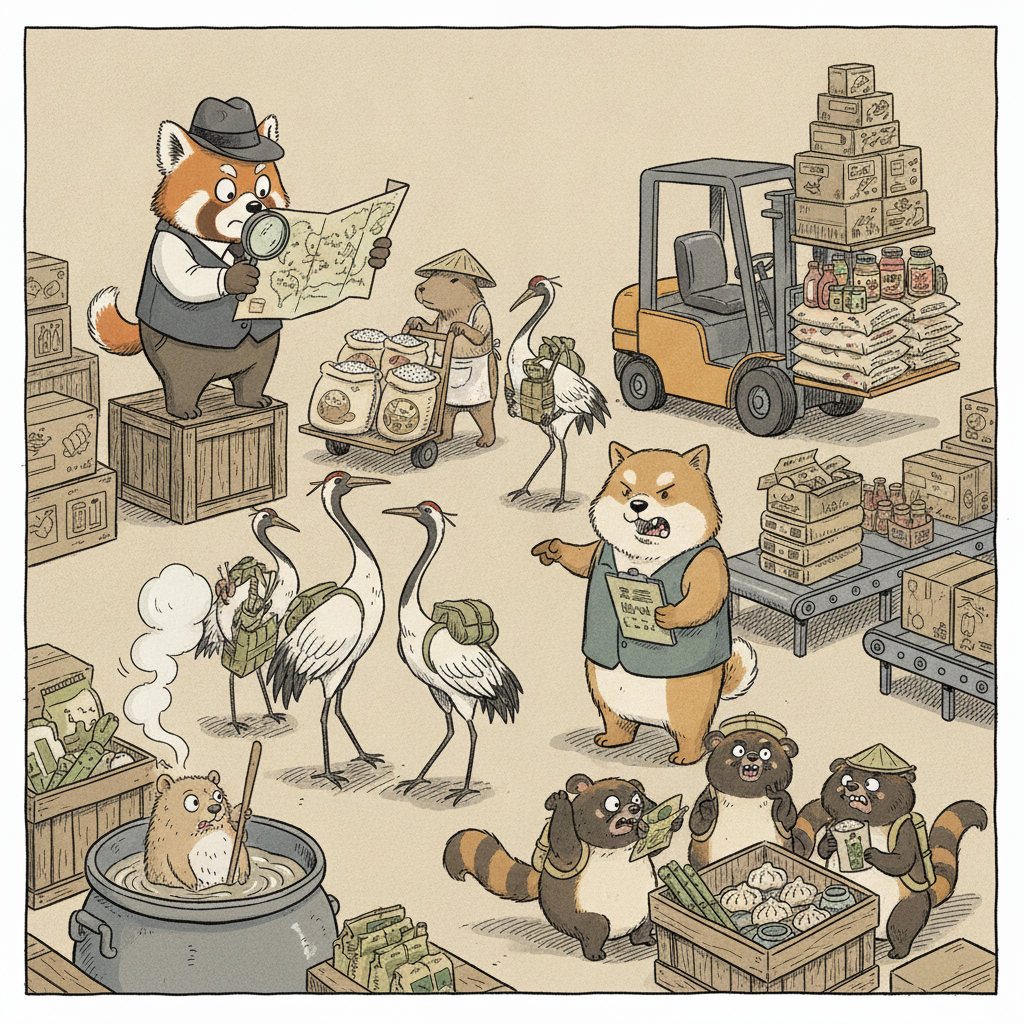
This is a New Jersey-based importer and distributor of Asian food and beverage products serving wholesale, retail, and e-commerce channels across North America. The company runs a full-stack importation, warehousing, and logistics operation that connects manufacturing partners in Taiwan and Southeast Asia to roughly 40,000 distribution points. It does about $6.8M in revenue and throws off $645,000 in cash flow, a roughly 9.5% margin that is typical for a distribution business but on the lower end.
What makes this more interesting than a pure freight-and-warehouse arbitrage play is the mix. The business has evolved from a straight importer into a brand developer, meaning it now owns proprietary brands alongside exclusive U.S. distribution agreements. Owned brands and exclusive rights are the difference between a commodity middleman and a business with pricing power and defensibility. If those margins and contracts are real, this is a distribution business with a moat most distributors do not have.
The end market is food and beverage, specifically Asian products riding a durable and growing consumer tailwind in North America. Demand for these categories has expanded structurally over the last decade as Asian cuisine and ready-to-drink beverages moved from ethnic aisles into mainstream grocery and e-commerce. The buyer is acquiring a logistics platform, a distribution footprint, and a portfolio of brands and exclusive rights, not just a book of reseller relationships.
Why we like it
- Earnings quality sits in the middle: $645,000 of cash flow on $6.8M revenue is a real, positive number, but the roughly 9.5% margin is thin and typical of distribution. The question that decides this deal is how much of that cash flow comes from owned proprietary brands versus low-margin pass-through importing, because those are two very different businesses at very different multiples.
- The moat is better than the average distributor because of proprietary brands and exclusive U.S. distribution agreements. Owned brands mean you control pricing and are not just marking up someone else's product, and exclusive rights mean competitors cannot simply source the same SKUs and undercut you. That combination is what separates a defensible platform from a replaceable middleman.
- Market tailwinds are genuine and durable. Asian food and beverage demand in North America has grown structurally for years as these categories move from niche to mainstream across grocery, retail, and e-commerce. This is not a fad category, it is a secular shift in the American consumer diet.
- The distribution footprint is a real asset: approximately 40,000 distribution points is expensive and slow to build. An operator who acquires this platform can layer new SKUs and exclusive brands onto existing shelf and account relationships, which is far cheaper than building the distribution from zero.
How to improve it
- Segment the P&L by owned brand versus pass-through distribution in the first 30 days. You cannot manage margin mix you cannot see, and knowing exactly which SKUs and brands drive the $645,000 tells you where to push volume and where to cut dead weight.
- Push the proprietary brand mix aggressively. Every dollar of revenue shifted from third-party pass-through to owned brands lifts gross margin, and expanding owned-brand penetration across the existing 40,000 distribution points is the single fastest lever on enterprise value.
- Build out e-commerce and DTC intentionally. The business already touches e-commerce channels, but food and beverage brands command far higher margins selling direct and on marketplaces than through wholesale, so invest in listings, content, and Amazon or Shopify infrastructure for the owned brands.
- Lock down and extend the exclusive distribution agreements. These contracts are the moat, so review renewal terms, tighten exclusivity language, and negotiate longer runways with the Taiwan and Southeast Asia partners before a competitor tries to poach them.
- Rationalize the SKU catalog and warehousing costs. Distribution businesses quietly bleed margin on slow movers that tie up working capital and shelf space, so cut the bottom decile of SKUs and renegotiate freight and 3PL rates against current volume.
- Cross-sell new exclusive brands into existing accounts. The distribution relationships are already paid for, so signing one or two additional exclusive brands and pushing them through the current 40,000 points is high-return growth with minimal incremental fixed cost.
Diligence notes
- Break down the $645,000 cash flow by margin source. Confirm exactly what percentage comes from owned proprietary brands versus low-margin importing, because a business that is 80% pass-through is worth far less than 6x and is far more fragile.
- Scrutinize the exclusive distribution agreements in detail. Verify they are in writing, check the remaining term, confirm they transfer to a new owner without renegotiation, and understand what happens if a manufacturing partner walks or opens direct-to-retail.
- Test customer and supplier concentration. Ask what share of revenue the top five customers and top five suppliers represent, because heavy reliance on a single Taiwan manufacturer or a few large accounts is the biggest hidden risk in importing.
- Examine working capital and inventory dynamics. Importing means cash is tied up in in-transit inventory, letters of credit, and long lead times, so understand the cash conversion cycle and how much working capital the buyer must fund on day one.
- Assess FX and tariff exposure. Sourcing from Taiwan and Southeast Asia means currency swings and trade policy directly hit margin, so review how the business has managed FX historically and model the impact of tariff changes on landed cost.
- Verify years in business and reason for sale, both listed as unknown. Understand how long these supplier and customer relationships have actually existed and why the owner is selling, since the durability of the moat depends heavily on the age and stability of the agreements.
Source
- Riverside 3PL Warehouse & Freight Logistics Operator, Southern CA
- Premier Trailer & Equipment Dealership, Established 2006
- Iowa Distribution Hub - Wholesale and E-commerce
- Asian Wholesale Food Distribution, North San Jose Warehouse
- Milwaukee Trucking & Local Freight Company, Established 2000 Wisconsin Carrier
- Texas 3PL Warehouse & Storage, 3 Dallas Warehouses
Want the full analysis on every deal? Unlock the complete platform with Accredited Pro to screen live listings and read our operator-level writeups.