Read the full deal writeup
Sign up for a free Accredited account to read the editorial writeup, financials, and broker contact for this deal.
Get Free AccessFull Editorial Writeup
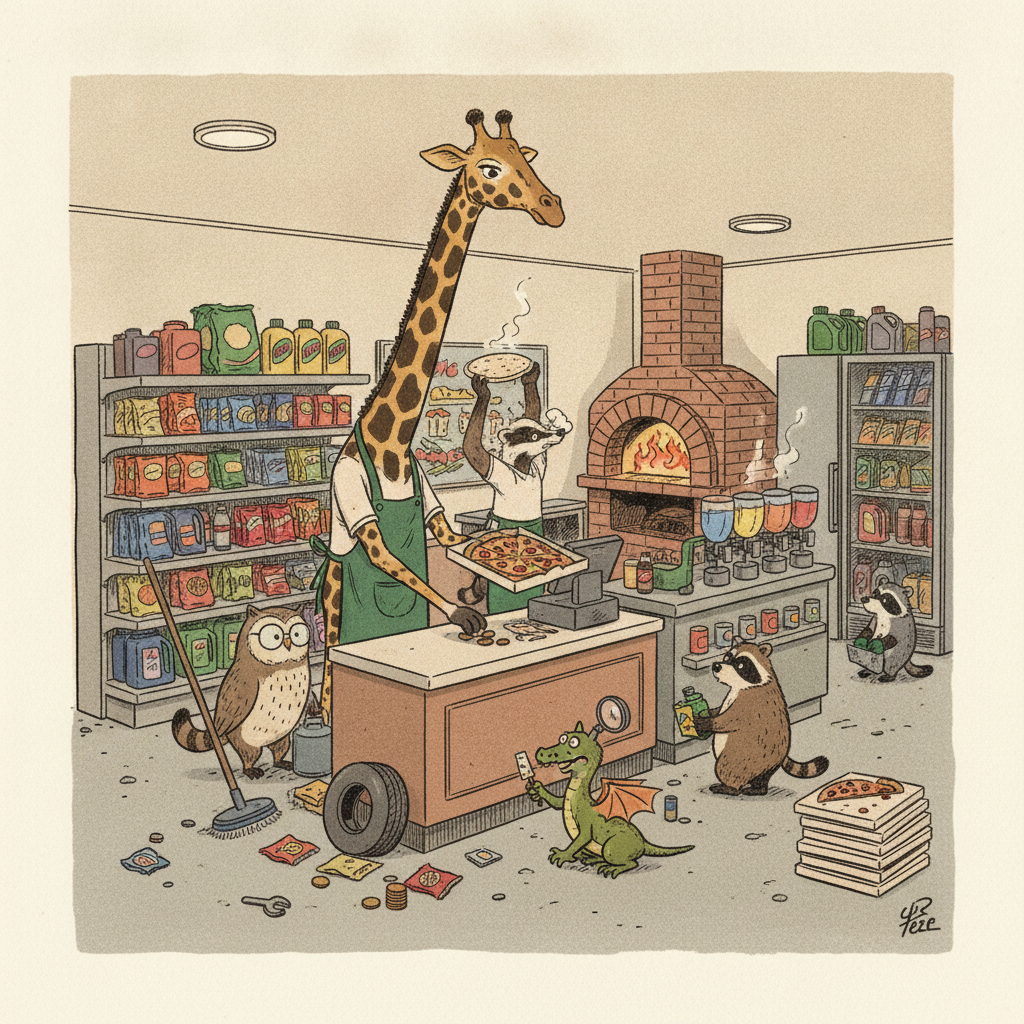
This is a branded fuel station paired with a convenience store and a franchised pizza operation in Mims, an unincorporated community in Brevard County, Florida on a major US highway. The site runs three revenue engines under one roof: roughly $170,000 in average monthly merchandise sales through the C-store, about $50,000 in monthly hot food sales through the pizza franchise, and roughly 20,000 gallons of fuel moved per month. Layered on top are the classic ancillary streams that make these sites resilient: lottery, ATM, a Bitcoin machine, ice sales of $4,000 to $5,000 monthly, cigarettes, and vendor rebates and commissions.
The asking price of $2,750,000 includes the real estate, a 3,500 square foot building on a high-traffic corridor in a mixed residential and commercial area, with inventory of roughly $80,000 sold on top. At $750,000 of SDE against $2.2m of revenue, this business is throwing off an unusually fat 34 percent owner-earnings margin for a fuel-and-C-store site, which signals the profit is being driven by high-margin inside sales (food, tobacco, lottery, ATM, crypto) rather than pennies-per-gallon fuel economics.
The seller is a motivated absentee owner citing retirement and downsizing, which means the business already runs on staff without a full-time owner on site. That is both the opportunity and the caution: an owner-operator willing to work the counter can likely lift margins further, but a buyer must underwrite whether the reported SDE is real absentee cash flow or whether it assumes owner labor being added back.
Why we like it
- Earnings quality is strong on paper: $750,000 SDE on $2.2m revenue is a 34 percent margin, well above typical gas-station economics, which tells you the money is coming from high-margin inside sales like hot food, tobacco, lottery, ATM, and ice rather than thin fuel spreads. That diversification of income streams reduces reliance on any single line.
- The deal includes the real estate, a 3,500 square foot building on a major US highway with heavy foot and vehicle traffic. Owning the dirt gives you control over occupancy cost, a hard-asset floor under the purchase price, and future optionality on redevelopment or a sale-leaseback to recover capital.
- Convenience and fuel are genuinely recession-resistant. People still buy gas, cigarettes, lottery tickets, and cheap hot food in a downturn, and the ancillary machines (ATM, Bitcoin, ice) generate passive commission income regardless of the economy.
- Because the seller is absentee and downsizing, an owner-operator or family buyer has a clear lever: putting hands on the register, tightening shrink, and managing labor directly can meaningfully expand an already healthy margin. The reported profit reflects a business that runs without a full-time owner present.
How to improve it
- Renegotiate or lock down the fuel supply agreement immediately. The listing flags a VERY SHORT supply agreement, which is a red flag on pricing and rebate terms; securing a longer, better-priced branded contract or shopping a new supplier can add margin per gallon and stabilize the fuel line.
- Attack shrink and labor now that ownership is present. Absentee-run C-stores routinely leak 2 to 5 percent of inside sales to theft and mismanagement, so installing tighter inventory controls, camera-linked POS reporting, and cash-handling discipline in the first 90 days can recover real dollars fast.
- Grow the hot food program. Pizza and prepared food carry the highest margins in the store at $50,000 monthly, so extending hours, adding grab-and-go and breakfast SKUs, and promoting delivery through the franchise app can lift the most profitable category with minimal capital.
- Optimize the fuel-versus-inside traffic loop. Use competitive fuel pricing and loyalty offers to pull cars in, then convert that traffic to high-margin inside purchases with signage, bundling, and impulse placement at the register.
- Audit and expand the ancillary income stack. Confirm the ATM, Bitcoin machine, lottery, and ice contracts are on best-available commission terms, and consider adding services like check cashing, bill pay, or a car wash if the lot allows.
- Formalize financials and separate real estate rent. Book a market rent line for the owned building so the operating business shows clean, standalone SDE, which improves your own resale multiple later and clarifies the true return on the operating business versus the property.
Diligence notes
- Scrutinize the fuel supply agreement in detail. The listing explicitly warns of a VERY SHORT supply agreement, so understand the remaining term, branding obligations, minimum volume commitments, rebate structure, and what happens to margin when it expires or renews.
- Validate the SDE with a full-labor lens. This is an absentee, retirement sale, so confirm whether the $750,000 SDE already reflects paying a manager and full staff or whether it silently assumes owner labor; the true absentee number could be lower once you staff the seller's role.
- Separate and verify the real estate value. Get an independent appraisal of the 3,500 square foot building and land, and confirm zoning, environmental status (underground storage tanks and any contamination liability are the big one for fuel sites), and Phase I / Phase II environmental reports before closing.
- Verify sales mix and margins with tax returns and POS data. The reported $170,000 monthly merchandise, $50,000 food, and 20,000 gallons should be tied back to sales tax filings, lottery statements, franchise royalty reports, and merchant processing records to confirm the higher-margin claims.
- Assess the pizza franchise agreement. Understand royalty rates, remaining term, transfer fees, buildout or remodel requirements, and territorial protections, since franchise economics and any required reinvestment directly affect the food line's contribution.
- Confirm inventory and working capital terms. Inventory of roughly $80,000 is on top of the asking price, so pin down exactly what transfers, how it is counted at close, and what normalized working capital the business needs to run.
Source
- Multi-Generation Auto Repair & Towing - Kansas
- Auto Reconditioning Shop - Minority Stake
- Jacksonville Auto Repair Franchise - Branded Service Unit
- Full-Service Auto & Light Truck Repair Business, 18-Year Houston Shop
- Suffolk County Auto Body Shop - 40-Year DRP Operation
- Franchised Auto Paint & Collision Center, Orange County CA
Want the full analysis on every deal? Unlock the complete platform with Accredited Pro to screen live listings and read our operator-level writeups.