Read the full deal writeup
Sign up for a free Accredited account to read the editorial writeup, financials, and broker contact for this deal.
Get Free AccessFull Editorial Writeup
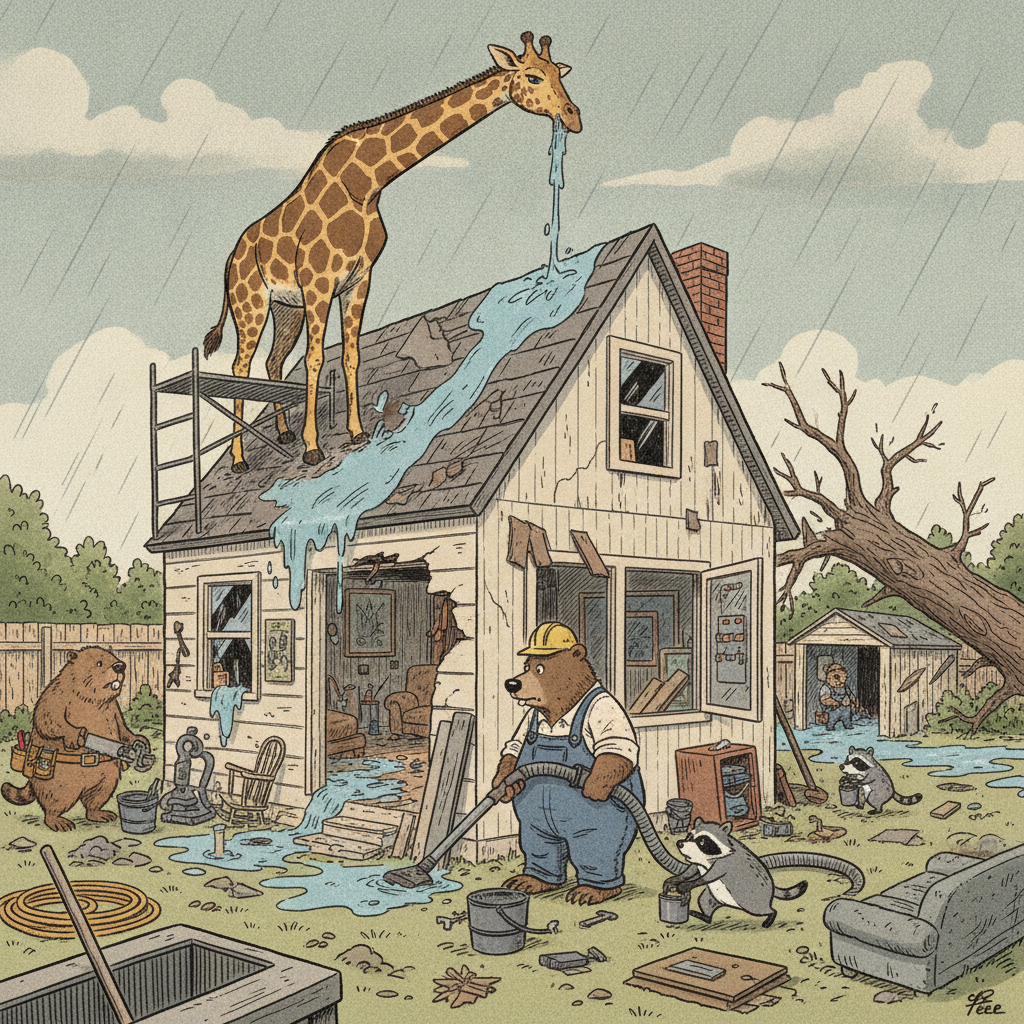
This is a property restoration and disaster recovery company operating in Bay City, Michigan, serving both residential and commercial clients dealing with water damage, fire and smoke damage, storm damage, and structural cleanup. Founded in 1990, the business has 35 years of operating history and generates roughly $1.375M in gross revenue against $513K in reported SDE, a healthy 37 percent owner-earnings margin for a services operation. It runs lean with only 2 full-time employees, which suggests heavy reliance on subcontractors, the owner, and/or seasonal labor to handle project surges.
The restoration model is attractive because demand is non-discretionary and event-driven. When a pipe bursts or a fire hits, the property owner needs remediation immediately, and insurance typically funds the bill. That creates urgency, fast decision-making, and multiple revenue lines (water mitigation, fire/smoke, structural cleanup) drawn from the same customer and referral base. This is the kind of boring, essential, cash-generative service business that holds up through downturns.
The standout feature here is price. The asking price of $268K against $513K of SDE implies roughly a 0.52x multiple, which is far below the typical 2x to 3.5x range for restoration businesses. That gap is either a genuine mispricing or a signal of real risk (owner-dependence, customer concentration, non-recurring project spikes, or add-back inflation) that a buyer must diligence carefully before assuming the number is real.
Why we like it
- Earnings quality looks strong on paper: $513K SDE on $1.375M revenue is a 37 percent margin, and restoration work is largely insurance-funded so collections tend to be reliable. The multiple revenue lines (water, fire, structural) diversify the mix within one client and referral base, smoothing project flow across the year.
- The moat is essential-service demand plus a 35-year operating history in a defined local market. Restoration jobs are urgent and non-negotiable, and long-tenured operators build referral pipelines with plumbers, insurers, adjusters, and property managers that are hard for a newcomer to replicate quickly.
- This is genuinely recession-resistant. Water and fire damage happen regardless of the economy, and insurance pays the bill rather than the homeowner cutting the check from discretionary income. That is exactly the kind of demand profile that holds up when consumer spending contracts.
- The price is the headline. At roughly 0.52x SDE, the downside is heavily protected: if the earnings hold up even partially post-transition, this pays back fast. Even a conservative buyer who assumes the true normalized SDE is meaningfully lower than $513K could still land at an attractive multiple.
How to improve it
- Verify then defend the earnings, then formalize referral relationships with insurance adjusters and Third Party Administrator programs. Getting on preferred-vendor lists for regional carriers converts sporadic project flow into a steadier, repeatable pipeline that raises the exit multiple.
- Build a 24/7 emergency intake and dispatch system with fast response-time guarantees. In restoration, whoever arrives first wins the job, so tightening response speed and after-hours capture directly increases close rate and revenue per lead.
- Reduce owner dependence by hiring or promoting a lead estimator and project manager. With only 2 full-time staff, the owner is almost certainly the sales, estimating, and QC function, and building that bench is what makes the business sellable at a higher multiple later.
- Add contents cleaning, mold remediation, and reconstruction/rebuild services to capture the full job value. Many restoration operators hand off the rebuild to a general contractor and leave margin on the table; keeping it in house lifts revenue per claim.
- Invest in local SEO, Google Business Profile, and paid search for high-intent emergency terms like water damage and fire restoration. These are urgent, high-value searches, and owning the top of the map pack in the Bay City area drives inbound work that does not depend on referrals.
- Systematize documentation and billing to speed insurance reimbursement. Using standardized estimating software (Xactimate) and tight documentation reduces claim disputes, shortens the cash cycle, and improves margins on every job.
Diligence notes
- The 0.52x multiple is the biggest red flag and the biggest opportunity. Confirm the $513K SDE is real and normalized, scrub the add-backs, and understand why a 35-year business with strong margins is priced so far below comps. Cheap prices usually hide something: owner-dependence, a health event, litigation, or one-time revenue that will not repeat.
- Understand revenue durability and concentration. Ask what share of jobs come from a single insurer, TPA, or referral source, and pull the last three years of monthly revenue to see how lumpy the work is. A few large fire or storm jobs can inflate a single year and distort the multiple.
- Test owner-dependence hard given only 2 full-time employees. Determine whether the owner personally holds the licenses, certifications (IICRC), insurer relationships, and estimating expertise, and whether those transfer. If the owner IS the business, the real acquisition cost is much higher than the $268K sticker.
- Confirm licensing, certifications, insurance, and any pending liability. Restoration involves mold, asbestos exposure, and structural work, so verify current IICRC certifications, contractor licensing, adequate general liability coverage, and the absence of open claims or bonding issues before closing.
- Reconcile the lean staffing against the revenue. Two full-time employees producing $1.375M in restoration revenue implies heavy subcontractor use or seasonal labor, so map the true labor structure and confirm that key subs and crews will stay post-sale.
Source
- HVAC Installs & Repairs Franchise, Salt Lake City
- Houston Property Restoration Franchise, Commercial-Focused, Harris County TX
- Los Angeles Home Health Care Agency, 20-Year Medicare-Contracted Provider
- Residential Electrical Contractor, Semi-Absentee Eastern Kansas
- Southwest Florida Electrical Contractor, Manager-Run, $8.15M Revenue
- Established Multifamily Flooring Contractor, 40-Year Southern California Business
Want the full analysis on every deal? Unlock the complete platform with Accredited Pro to screen live listings and read our operator-level writeups.