Read the full deal writeup
Sign up for a free Accredited account to read the editorial writeup, financials, and broker contact for this deal.
Get Free AccessFull Editorial Writeup
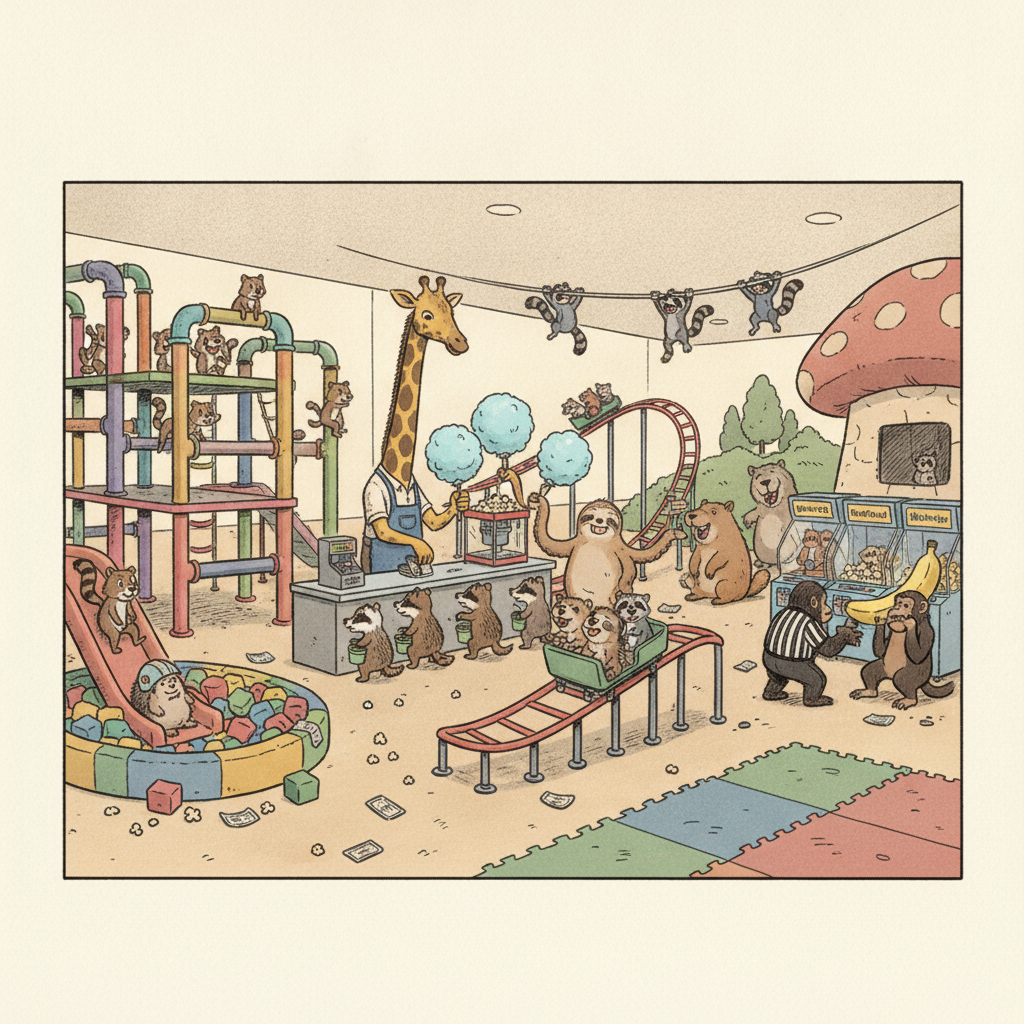
This is an approximately 11,000 square foot indoor family entertainment center in Brooklyn, New York, running on three diversified revenue streams: admissions, arcade games, and birthday parties. The physical footprint includes four dedicated party rooms, a 20-game arcade with VR attractions, an indoor soft play area, bumper cars, a Build-A-Bear station, themed rooms, and a 1,000 square foot eat-in restaurant. On $1.237M in revenue it throws off $662,400 in owner cash flow, a fat 54% margin that suggests strong per-guest economics and high-margin add-ons like parties and food.
The operation is described as semi-absentee with experienced staff already in place, which is the headline attraction here for a buyer who wants a running asset rather than a job. It comes with 16 licenses in place, current quarterly inspections, and roughly 7 years remaining on what the broker calls a favorable lease. A significant repeat customer base and turnkey status round out the pitch.
The catch every buyer should weigh: this is a discretionary, location-dependent, single-site attraction business. Family entertainment centers live and die on foot traffic, local demographics, and a lease that must stay favorable. At 2.79x cash flow the price looks reasonable on paper, but the durability of that $662K and the true owner workload behind the semi-absentee label are the whole game.
Why we like it
- The margin profile is genuinely strong: $662,400 of cash flow on $1.237M of revenue is a 54% margin, driven by high-contribution categories like birthday parties, arcade tokens, and a small food operation. Those categories carry pricing power and low variable cost once the box is built, which is why the economics work at this scale.
- The asset is turnkey and de-risked on compliance: 16 licenses in place, current quarterly inspections, and experienced staff already running the floor. For a New York City operation those permits and inspections are a real barrier and a real headache to replicate, so buying them in place has tangible value.
- Revenue is diversified across three streams (admissions, arcade, and parties) plus a restaurant, so no single line carries the whole P&L. The repeat customer base and birthday party pipeline provide semi-predictable, event-booked forward revenue rather than pure walk-in luck.
- The 2.79x multiple is below typical asking on single-site entertainment assets, and the semi-absentee structure means a hands-on operator could plausibly lift throughput without adding a full second location. That gap between passive-run cash flow and operator-run potential is where the return lives.
How to improve it
- Attack party bookings as the profit center: with only four rooms, build online self-serve booking, dynamic weekend pricing, and packaged add-ons (food, characters, goody bags) to raise average ticket per party. Parties are the highest-margin slot and the easiest lever to pull in the first 90 days.
- Tighten the arcade and VR yield with card-swipe redemption analytics, replacing dead machines with proven earners and repricing tokens. Arcade revenue is measurable per machine per square foot, so cull the bottom performers and redeploy floor space toward what actually earns.
- Launch a membership and season-pass program to convert one-time visitors into recurring revenue and smooth the seasonality inherent in a family attraction. Even a modest paid membership base creates deferred revenue and predictable weekday traffic.
- Reactivate the repeat customer base with an email and SMS engine tied to the party CRM, targeting past party parents with birthday reminders and off-peak promotions. This is nearly free demand generation from a list you already own.
- Optimize the 1,000 SF restaurant, which is likely under-monetized relative to its captive audience. Simplify the menu to high-margin items, bundle food into admission and party packages, and consider a bar or premium beverage line where licensing allows.
- Renegotiate or extend the lease early given only 7 years remain; a longer term protects the enterprise value and removes the single biggest risk to a resale. Lock this down before it becomes a discount at your own exit.
- Formalize the management layer so the semi-absentee model is documented and transferable, with a general manager on comp incentives tied to revenue and labor cost. This both protects your time and materially widens the future buyer pool.
Diligence notes
- Verify the exact reality behind semi-absentee: get the owner's true weekly hours, the GM's role, and confirm the $662,400 is after a market-rate manager salary. If the seller is quietly working 30 hours a week, the real absentee cash flow is lower and the multiple is not what it appears.
- Pull the lease and read every clause: the 7-year remaining term, renewal options, rent escalators, percentage-rent, and assignability. A Brooklyn location with an expiring or landlord-favorable lease can wipe out the value of the operating business, so this is the top item.
- Demand three years of monthly financials broken out by the three revenue streams plus food, and reconcile to bank statements, POS reports, and sales tax filings. A cash-heavy arcade and party business needs the deposits to match the reported top line before you trust the 54% margin.
- Analyze seasonality and per-visit trends: family entertainment centers swing hard by school calendar, weather, and post-COVID recovery patterns. Get the party-booking pipeline and month-over-month attendance to confirm the business is stable or growing, not decaying.
- Confirm all 16 licenses and quarterly inspections transfer cleanly to a new owner and that there is no capital catch-up needed on aging attractions (bumper cars, VR, soft play). Deferred maintenance and non-transferable permits are common hidden costs in these assets.
- Assess the local competitive and demographic picture around the undisclosed exact location, including nearby competing venues and population density of young families. As a discretionary single-site attraction, this business is fully exposed to local foot traffic and a downturn in consumer spending.
Source
- 250-Unit California ATM Portfolio, 15-Year Remotely Managed Network
- Jacksonville ATM Portfolio, 286-Unit Third-Party-Loaded Route in Florida
- 275-Location ATM Portfolio, Duval County FL
- 275-Unit ATM Route, San Francisco County
- Myrtle Beach ATM Portfolio, 250-Terminal South Carolina Route
- 275-Location ATM Portfolio, Fully Managed, Duval County FL
Want the full analysis on every deal? Unlock the complete platform with Accredited Pro to screen live listings and read our operator-level writeups.